

How Much Is My Car Accident Case Worth in California?
Published on / Category: Accident Injuries & Recovery
There is no standard dollar value for a California car accident claim. Documented losses and evidence of fault help determine what you may be entitled to recover. Insurance limits and other sources of recovery affect how much you may be able to collect. Fees, costs, liens, and reimbursement obligations can affect how much you take home.
Whether you’re gathering records or reviewing an insurance offer, understanding these factors can help you evaluate your options.
At a Glance:
- Medical costs, lost earnings, future care, and daily-life effects may influence case value.
- Fault and available insurance affect potential recovery.
- Medical bills alone do not establish a claim's value.
- Fees, costs, and valid reimbursement obligations may reduce net proceeds.
What Affects the Value of a Car Accident Case in California?
A California car accident claim is evaluated using evidence of your losses, legal responsibility, and available recovery sources. Several factors matter.
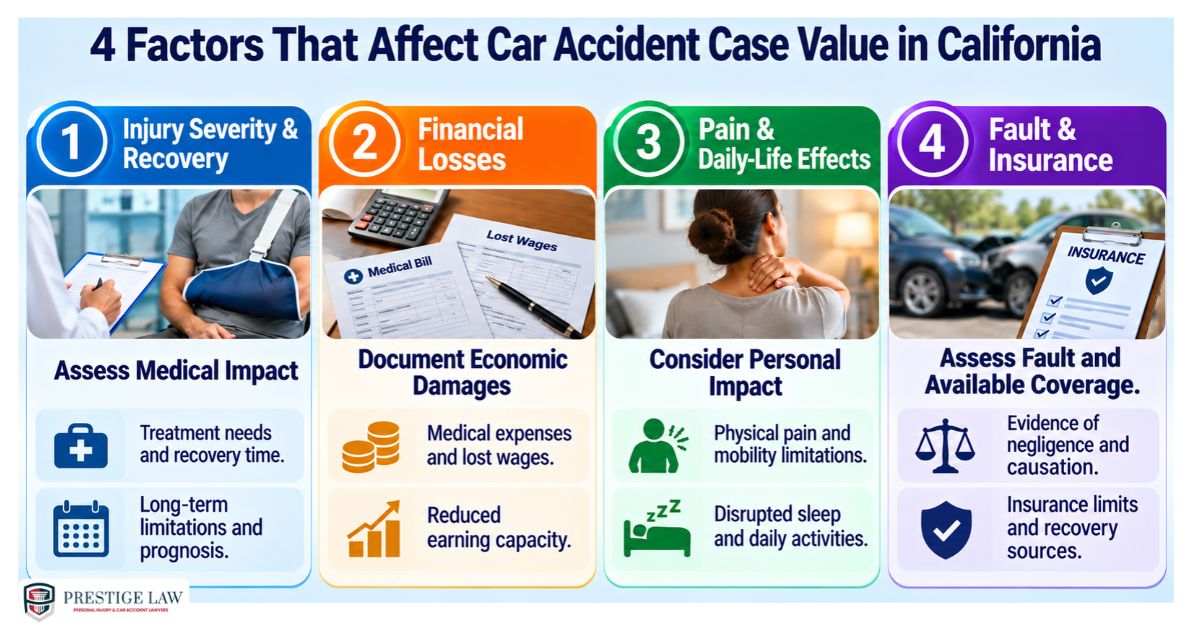
Injury Severity and Recovery Outlook
An injury’s diagnosis does not automatically determine compensation. Recovery time, treatment needs, lasting limitations, and prognosis can make similar injuries affect people differently.
Medical records, specialist evaluations, and treatment recommendations help establish these effects.
Financial Losses
Medical expenses, missed wages, and reduced earning ability may contribute to the claim’s economic value.
Bills, payment records, employment documents, and medical restrictions help show how the collision affected your finances.
Pain and Daily-Life Effects
Injuries may interfere with sleep, mobility, household responsibilities, or activities you previously enjoyed.
These effects may support noneconomic damages when legally recoverable and supported by evidence. No universal formula determines their value.
Fault and Insurance
Evidence must connect another party’s negligence to your injuries. Disputed responsibility, applicable policy limits, and other potential recovery sources can affect the amount you may recover.
Which Losses Can a California Car Accident Claim Include?
California recognizes several damages categories, depending on the circumstances and applicable law.
Past and Future Medical Expenses
Medical damages may include the reasonable value of reasonably necessary treatment, such as emergency care, rehabilitation, medication, and specialist visits.
However, the full amount initially billed by a medical provider is not automatically recoverable. Under California law, past medical damages generally depend on the reasonable value of necessary treatment and the amounts actually paid or incurred. Contractual reductions and other payment arrangements may affect the recoverable amount.
Under CACI No. 3903A, future medical expenses must be supported by evidence of reasonably necessary care the injured person is reasonably certain to need, together with its reasonable cost.
Lost Earnings and Reduced Earning Capacity
Lost earnings can include income you already missed and income you are reasonably certain to lose in the future because of the injury.
Reduced earning capacity is a loss of your ability to earn. You may have reduced earning capacity even if you have returned to work.
Pay records, employment history, medical restrictions, and vocational evaluations may help establish these losses.
Pain, Suffering, and Other Noneconomic Harm
Depending on the claim, compensation may address physical pain, emotional distress, and reduced enjoyment of life.
CACI No. 3905A provides guidance on these damages. Their evaluation depends on the evidence rather than a fixed calculation.
Property Damage
Vehicle repairs and other qualifying property losses may also be recoverable. These should be documented and evaluated separately from bodily-injury damages.
What Evidence Supports a Car Accident Case Evaluation?
A useful evaluation connects each claimed loss to supporting records.
Car Accident Losses and Supporting Evidence
| Potential Loss | Useful Evidence | What It Helps Show |
|---|---|---|
| Past Medical Care | Itemized Bills, Payment Records, Treatment Notes | Treatment Received and Associated Expenses |
| Future Care | Medical Recommendations, Prognosis, Care Plans | Expected Treatment and Related Costs |
| Lost Earnings | Pay Stubs, Tax Records, Employer Letters | Income Missed Because of Injuries |
| Reduced Earning Capacity | Work Restrictions, Employment History, Vocational Assessments | Longer-Term Employment Limitations |
| Pain and Daily-Life Changes | Medical Notes, Activity Records, Witness Observations | Effects on Ordinary Activities |
| Property Damage | Photographs, Repair Estimates, Receipts | Qualifying Property Losses |
You do not need every document before requesting a consultation.
For example, keeping a simple record of difficulties with walking, driving, sleeping, or household tasks may help explain how an injury affects daily life.
The California Courts’ personal injury guidance provides additional information about injury claims and supporting evidence.
How Do Fault and Insurance Affect What You Can Recover?
Even substantial documented losses do not guarantee that the full amount can be recovered.
Shared Fault May Reduce Compensation
California follows pure comparative negligence. Under Li v. Yellow Cab Co. (1975), an injured person’s own negligence may reduce recoverable damages according to their share of responsibility rather than automatically preventing recovery.
An insurer’s initial fault assessment is not necessarily a final legal determination. Photographs, witness accounts, vehicle damage, and other evidence may help clarify how shared fault affects a California car accident settlement.
Insurance Limits Affect Available Recovery
The legally supported value of your losses may exceed the insurance coverage available to satisfy a claim.
Policy limits apply to particular coverages and do not automatically establish the full value of your damages. Other potentially responsible parties or insurance sources may also be relevant.
For more information, read Prestige Law’s guide to collecting from an uninsured or underfunded defendant.
How Much of a Settlement Might You Actually Receive?
Your gross settlement is the total agreed compensation before deductions. Your net proceeds are what remains after applicable deductions and required payments.
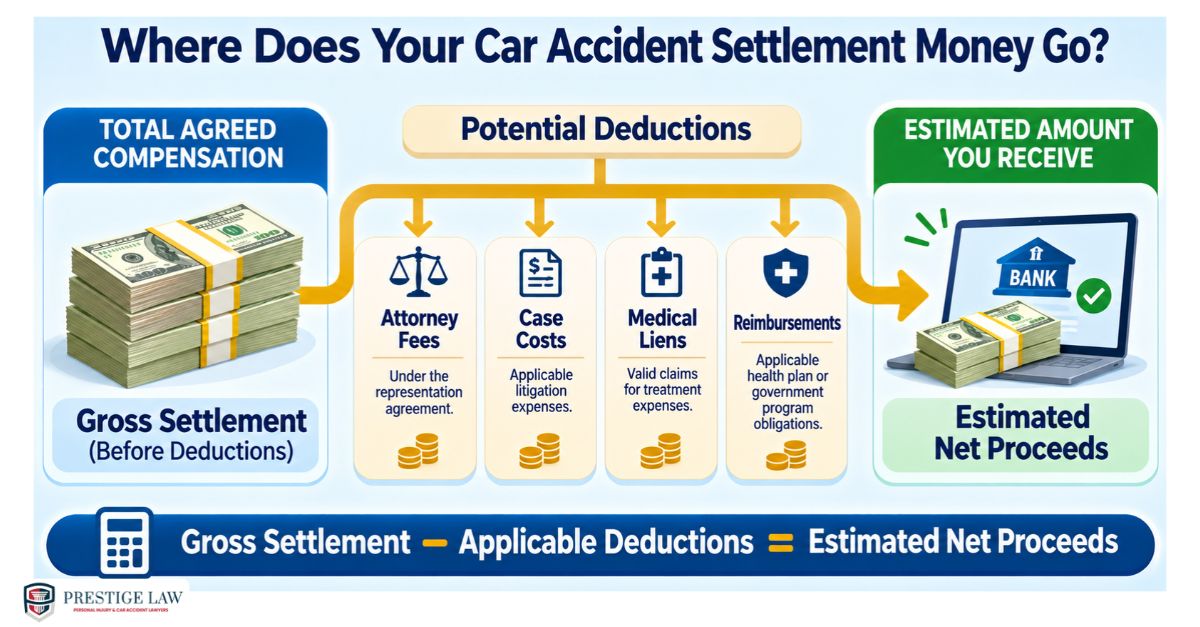
These may include:
- Attorney fees: Amounts payable under the representation agreement.
- Case costs: Qualifying litigation expenses allocated under that agreement.
- Medical liens: Valid claims against settlement funds for certain treatment expenses.
- Reimbursements: Applicable obligations involving health plans, Medicare, Medi-Cal, or other parties.
Not every settlement involves all these deductions, and how medical bills are paid after a California car accident can affect which reimbursement obligations apply.
For example, California Civil Code §3040 addresses certain health insurance reimbursement rights but does not govern every medical lien.
Before accepting an offer, request an explanation of anticipated fees, expenses, liens, and unresolved reimbursement issues. A settlement statement can help clarify the expected amount remaining after deductions.
How Can You Evaluate a Car Accident Settlement Offer?
An insurance offer should be considered alongside your documented losses and any unresolved injury-related needs.
Before accepting, ask:
- Does the offer account for reasonable medical expenses already incurred?
- Have future treatment needs and long-term limitations been evaluated?
- Are missed earnings or reduced earning ability supported by records?
- Does the offer address qualifying pain and daily-life effects?
- Is the insurer disputing fault or relying on coverage limits?
- What fees, costs, liens, or reimbursements may affect your proceeds?
- Would accepting the offer require releasing future claims related to the accident?
A signed settlement release may permanently resolve specified claims. This matters when the extent of your injuries or future care requirements remains uncertain.
Rather than relying on an online payout calculator, compare the offer with the available evidence and seek clarification about any missing or disputed losses.
How Prestige Law Firm P.C. Evaluates Car Accident Claims
Prestige Law Firm P.C.’s California car accident lawyers can review records of your treatment, missed work, and how your injuries affect daily life. They can also assess disputed fault, available insurance, and potential settlement deductions so you can evaluate an offer with a clearer picture of your losses and potential net proceeds.
Conclusion
Start with documented losses, then consider how shared fault and available coverage may affect the amount you can recover. If you have a settlement offer, review the proposed release and ask for an estimate of what you would receive after fees, costs, liens, and reimbursements.
Get Help Evaluating Your California Car Accident Claim
A consultation can help identify important evidence and questions to consider before making a settlement decision.
Disclaimer: This article provides general information about California law, not legal advice. Claim value and available compensation depend on individual circumstances. Contacting the firm does not, by itself, create an attorney-client relationship.
Sources
- CACI No. 3903A: Medical Expenses, Past and Future (Economic Damage)
- CACI No. 3903C: Past and Future Lost Earnings (Economic Damage)
- CACI No. 3903D: Lost Earning Capacity (Economic Damage)
- CACI No. 3905A: Physical Pain, Mental Suffering, and Emotional Distress (Noneconomic Damage)
- Howell v. Hamilton Meats & Provisions, Inc., 52 Cal.4th 541
- Li v. Yellow Cab Co., 13 Cal.3d 804
- California Civil Code §3040: Health Care Liens
- Personal Injury Cases
- California Rules of Professional Conduct, Rule 7.1: Communications Concerning a Lawyer’s Services.
Can I evaluate an offer before I know whether I need future care?
Yes, but uncertainty about future treatment may limit how accurately an offer can be assessed. Medical opinions about recovery, ongoing symptoms, and reasonably expected care can provide important context. Consider legal advice before signing a release while significant future losses remain unknown.
Can two people with similar injuries receive different offers?
Yes. Similar diagnoses can involve different recovery periods, treatment expenses, employment effects, and daily-life limitations. Fault disputes and insurance coverage may also differ. An insurer's offer is not necessarily an objective measure of a claim's full legal value.
What records should I bring to a consultation?
Bring whatever you have, including collision reports, photographs, medical records, bills, insurance correspondence, and proof of missed work. You do not need every document before seeking guidance. An attorney can help identify additional evidence relevant to evaluating your claim.

Get Started Today!
24 hours a day / 7 days a week / 365 days a year
Contact our attorneys serving Los Angeles and the Antelope Valley to schedule your free consultation.