
Different Types of Car Accidents on California Roads
Published on / Category: Accident Injuries & Recovery
Car accidents are not all evaluated the same way in California. The type of car accident involved, such as a rear-end collision, a T-bone crash, or a multi-vehicle freeway incident, shapes how fault is analyzed, what evidence carries the most weight, and how insurance companies approach a claim.
Accident classification plays a central role in personal injury cases. Insurance adjusters rely on crash type to frame liability arguments, assess injury claims, and influence settlement discussions.
Different collision dynamics create distinct injury patterns and require different forms of evidence, from vehicle damage analysis to traffic footage and witness accounts.
Clear awareness of common types of car accidents in California helps injured drivers make sense of the claims process and recognize why thorough investigation matters after a serious crash.
Accurate classification often becomes the foundation for establishing responsibility and presenting a well-supported claim.
At a Glance:
Car accidents come in many forms, and the type of crash matters. Rear-end, side-impact, head-on, rollover, and multi-vehicle accidents each involve different liability rules, injury risks, and evidence considerations. Insurance companies use accident type to evaluate fault, injuries, and claims, which is why proper investigation and documentation are critical. If a third party, roadway condition, or commercial vehicle is involved, liability can become more complex and require deeper analysis.
Common Types of Car Accidents
Car accidents can happen in many different ways, and the type of crash often affects how fault and liability are evaluated. Here are the most common types of car accidents in California, along with how they typically occur and the legal issues that may follow.
Rear-End Collisions
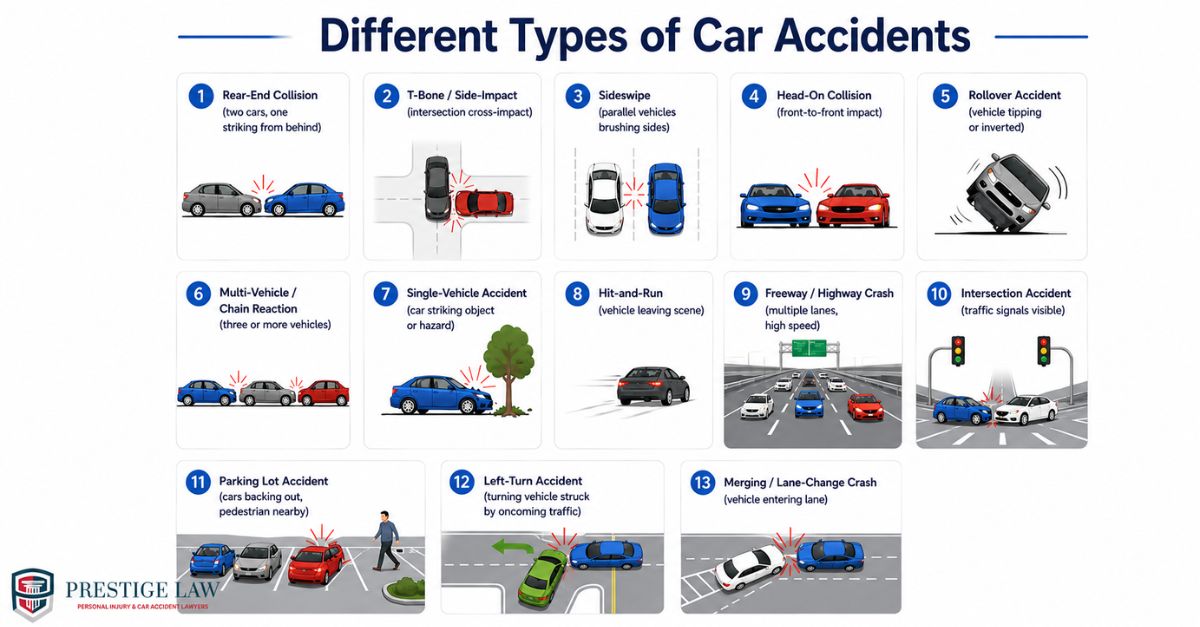
Rear-end collisions occur when one vehicle strikes the back of another and are among the most common car accidents in California.
These crashes frequently happen in stop-and-go traffic, at red lights, or on congested freeways. Typical causes include tailgating, distracted driving, speeding, and sudden braking in heavy traffic conditions.
Under California Vehicle Code §21703, drivers must maintain a reasonable and prudent following distance. Because of this rule, rear-end collisions often involve a presumption that the trailing driver failed to keep a safe distance.
Insurance companies frequently rely on this presumption when evaluating liability, although exceptions may apply in situations involving sudden mechanical failure, unsafe lane changes, or unexpected road hazards.
Injury patterns commonly associated with rear-end collisions include whiplash, neck and shoulder strain, lower back injuries, and soft tissue damage. Even low-speed rear-end impacts can cause delayed symptoms that worsen over time, making early documentation and medical evaluation important.
T-Bone / Side-Impact Accidents
T-bone accidents, also known as side-impact collisions, typically occur at intersections when the front of one vehicle strikes the side of another.
These crashes often result from failure to yield, running red lights, or ignoring stop signs, conduct governed by California Vehicle Code §21453.
Because the sides of vehicles provide less protection than the front or rear, side-impact crashes carry a higher risk of serious injury. Occupants may suffer head injuries, chest trauma, rib fractures, internal organ damage, and pelvic injuries.
Determining fault often requires analyzing signal timing, right-of-way rules, and vehicle positioning at the moment of impact.
Sideswipe Accidents
Sideswipe accidents occur when two vehicles traveling in the same or opposite directions make lateral contact. These crashes frequently happen during lane changes, merging, or when a driver drifts out of their lane. California law requires drivers to ensure lane changes can be made safely under Vehicle Code §22107 and §21658.
Fault disputes are common in sideswipe accidents because drivers often provide conflicting accounts of lane position and signaling.
Damage patterns typically include long scrapes along doors, mirrors, and side panels rather than concentrated impact points. Although sideswipe crashes may appear minor, they can lead to loss of control and secondary collisions.
Head-On Collisions
Head-on collisions involve vehicles striking each other front-to-front and are among the most dangerous types of car accidents.
These crashes are commonly linked to wrong-way driving, unsafe passing, impaired driving, or driver fatigue. Relevant violations often include California Vehicle Code §21651 (wrong-way driving) and §23152 (DUI).
Due to the combined speed of both vehicles, head-on collisions frequently result in severe or fatal injuries, including traumatic brain injuries, spinal cord injuries, and internal organ damage.
Accident reconstruction plays a critical role in these cases, helping determine speed, lane encroachment, and the precise point of impact.
Rollover Accidents
Rollover accidents occur when a vehicle tips onto its side or roof, often after striking another vehicle, curb, or roadway barrier. High speeds, sharp turns, uneven road surfaces, and vehicle design factors all contribute to rollover risk. Speed and unsafe driving behaviors are examined under California Vehicle Code §22350, the basic speed law.
SUVs, pickup trucks, and vans are more prone to rollovers due to their higher center of gravity. These accidents carry a heightened risk of catastrophic injuries, including spinal injuries, traumatic brain injuries, and crush injuries, particularly if occupants are ejected from the vehicle.
Multi-Vehicle / Chain-Reaction Collisions
Multi-vehicle collisions involve three or more vehicles and commonly occur on freeways, during sudden traffic slowdowns, or in poor visibility conditions.
Chain-reaction crashes often begin with a rear-end collision that triggers additional impacts. California Vehicle Code §21703 is frequently cited when assessing whether drivers maintained safe following distances.
Liability in multi-vehicle accidents is often shared, with insurers evaluating comparative fault among multiple drivers. These cases involve complex insurance issues, overlapping policies, and extensive vehicle damage, making thorough investigation and evidence coordination essential.
Single-Vehicle Accidents
Single-vehicle accidents involve only one car but do not automatically mean the driver is solely responsible. These crashes may result from road debris, potholes, defective signage, poor road design, or mechanical failures.
While driver conduct is reviewed, third-party liability may arise under California Government Code §835 if a dangerous roadway condition contributed to the crash.
Single-vehicle accidents can still result in serious injuries, particularly at high speeds or in rural or mountainous areas where vehicles may strike fixed objects.
Hit-and-Run Accidents
Hit-and-run accidents occur when a driver leaves the scene without providing identification or assistance, violating California Vehicle Code §20001 and §20002. These cases present unique challenges because the at-fault driver is initially unknown.
Victims often rely on uninsured or underinsured motorist coverage while investigators work to identify the fleeing driver. Early investigation is critical to preserve surveillance footage, locate witnesses, and document vehicle debris or paint transfers.
Freeway & Highway Crashes
Freeway and highway crashes typically involve higher speeds, heavier traffic volumes, and rapidly changing driving conditions.
Unsafe lane changes, speeding, and following too closely, regulated by California Vehicle Code §22350, §21658, and §21703, are common contributing factors, especially during peak traffic hours or sudden slowdowns.
Because vehicles are traveling at greater speeds, freeway crashes often lead to multi-vehicle collisions and more serious injuries.
These accidents may also involve commercial trucks, delivery drivers, or rideshare vehicles, which can introduce additional layers of liability, insurance coverage, and regulatory considerations during the claims process.
Intersection Accidents
Intersection accidents often occur when drivers violate traffic signals, fail to yield the right of way, or misjudge the speed and distance of oncoming traffic.
Common scenarios include red-light violations, unsafe left turns, and rolling through stop signs. Applicable statutes include California Vehicle Code §21453, §21800, and §21801, which govern signal compliance and right-of-way responsibilities.
These crashes frequently lead to disputes over fault because drivers may provide conflicting accounts of who had the legal right of way at the time of the collision.
Traffic camera footage, signal timing data, vehicle damage patterns, and witness statements are often used together to reconstruct how the accident occurred and clarify liability in intersection collisions.
Parking Lot Accidents
Parking lot accidents typically occur at lower speeds, but they often involve unclear fault due to limited signage, tight spaces, and unconventional traffic patterns.
Common scenarios include backing out of parking spaces, vehicles competing for the same spot, and collisions involving pedestrians walking between parked cars. Although parking lots are usually private property, California right-of-way principles under Vehicle Code §21800 and §21950 may still apply in many situations.
These accidents can present unique challenges because traffic flow is less defined than on public roads.
Pedestrian visibility, driver attentiveness, vehicle positioning, and the use of turn signals or brake lights are often central factors when determining how a parking lot collision occurred and how responsibility is assessed.
Left-Turn Accidents
Left-turn accidents frequently occur when a driver turns across oncoming traffic without yielding the right of way. Under California Vehicle Code §21801, drivers making left turns are required to yield to approaching vehicles that are close enough to pose an immediate hazard.
These crashes often happen at intersections with traffic signals, unprotected left turns, or during gaps in traffic that are misjudged.
Because left-turn accidents commonly involve a vehicle striking the side of another, they can result in serious injuries. Liability disputes are frequent, especially when factors such as vehicle speed, signal timing, sightlines, or obstructions affect visibility.
Evidence such as traffic signal data, vehicle damage patterns, and witness statements is often examined to clarify how the collision occurred.
Merging & Lane-Change Crashes
Merging and lane-change crashes occur when drivers fail to properly signal, misjudge gaps in traffic, or overlook blind spots. These actions are governed by California Vehicle Code §22107 and §21658.
Evidence challenges often involve determining vehicle position, signaling behavior, and driver awareness at the moment of impact, making physical evidence and witness testimony especially important.

Why Accident Type Matters for Liability
Below are the key ways insurance companies and legal teams use crash type to evaluate fault, assess injuries, and frame responsibility under California law.
Presumptions of Fault in Certain Crashes
In California, the type of car accident involved can create presumptions about how fault is evaluated. While no accident type automatically determines liability, certain crashes are commonly associated with specific legal assumptions based on traffic laws and typical driving behavior.
Rear-end collisions often involve a presumption that the trailing driver failed to maintain a safe following distance under California Vehicle Code §21703.
Intersection accidents may raise liability concerns when a driver violates traffic signals or fails to yield the right of way, as governed by Vehicle Code §21453 and §21800–21801.
Similarly, crashes involving impaired driving or wrong-way travel frequently implicate violations of Vehicle Code §23152 and §21651, which can significantly influence fault analysis.
These presumptions guide initial insurance evaluations but may be challenged depending on the facts, evidence, and circumstances surrounding the crash.
How Insurance Companies Use Accident Type

Insurance companies closely analyze accident type when assessing claims. Crash classification helps insurers frame their liability position, including efforts to minimize their insured’s responsibility or shift fault to another party.
For example, insurers may argue that a rear-end collision involved sudden or unsafe braking, or that an intersection crash resulted from shared right-of-way errors.
California’s comparative negligence system allows fault to be divided among multiple parties. Insurers often rely on accident type to argue comparative fault, asserting that an injured driver’s actions contributed to the collision. This approach can affect how damages are evaluated and allocated during claim negotiations.
Accident type can also affect early settlement conversations. After a crash, some drivers may be offered private payment instead of going through insurance.
Understanding the risks of accepting an out-of-pocket settlement can help protect your legal and financial interests.
Injury Patterns Linked to Crash Type
Accident type also plays a role in how insurers evaluate injury claims. Different crash dynamics create different injury patterns, and insurers frequently compare reported injuries to the expected force and direction of impact.
Rear-end collisions are often associated with whiplash and soft tissue injuries, while side-impact crashes may involve head, chest, or internal injuries due to lateral force.
Insurers may question medical claims that appear inconsistent with the documented impact dynamics. For this reason, understanding how injury patterns align with accident type is an important part of evaluating medical evidence and establishing the connection between the collision and resulting injuries.
How Investigators Determine Accident Type
Accurately classifying a car accident requires more than reviewing a police report. Investigators analyze physical evidence, vehicle data, and scene conditions to determine how a collision occurred and which accident category applies. This process helps clarify fault, injury mechanisms, and liability issues under California law.
Impact Location and Vehicle Damage

The location of damage on each vehicle provides important clues about how a crash occurred. Front-end damage may indicate a head-on or rear-end collision, while side-panel damage often points to a T-bone or sideswipe accident.
Investigators compare damage location with vehicle positioning, travel direction, and roadway layout to determine the sequence of events leading up to impact.
Damage Patterns and Crush Zones
Beyond surface damage, investigators examine crush zones, the areas of a vehicle designed to absorb impact force. The depth, direction, and symmetry of these crush zones can indicate speed, direction of travel, and relative force between vehicles.
Uneven or offset crush patterns may suggest lane changes, turning maneuvers, or partial impacts rather than direct collisions.
Event Data Recorders (Black-Box Data)
Many modern vehicles are equipped with event data recorders, often referred to as black boxes, which may capture key information in the moments leading up to a collision, including:
- Vehicle speed immediately before impact
- Braking activity, including whether brakes were applied and for how long
- Throttle position, showing acceleration or deceleration behavior
- Seatbelt usage at the time of the crash
- Airbag deployment timing and force
This data can be used to confirm or challenge driver statements and provide objective insight into how the accident occurred.
Witness Statements
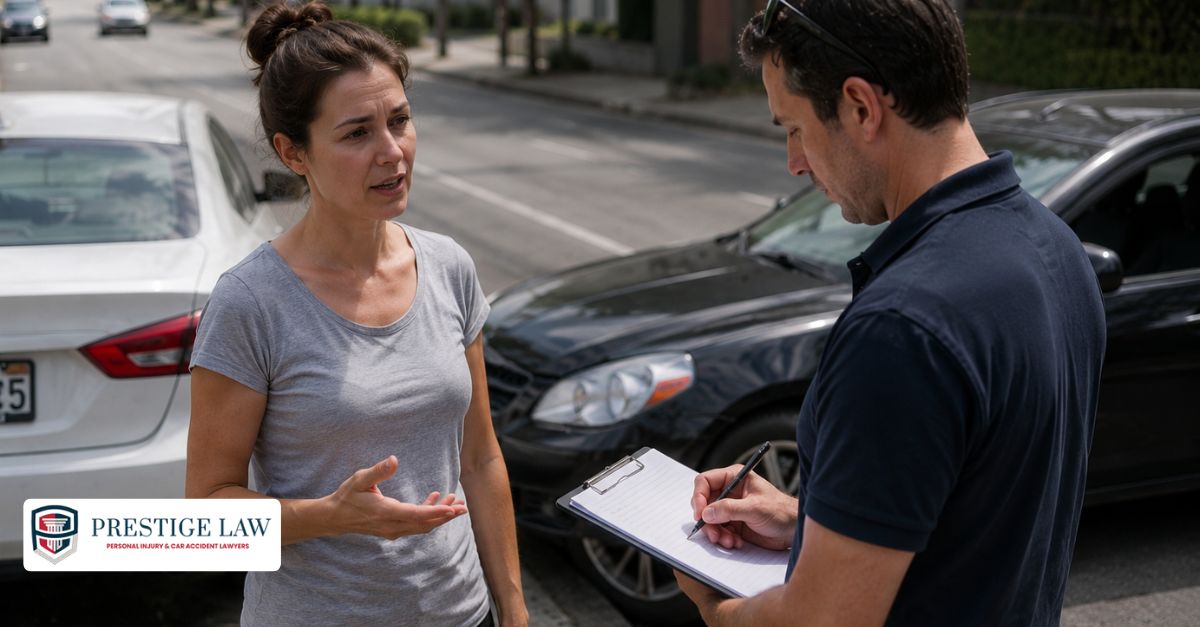
Statements from drivers, passengers, pedestrians, and nearby witnesses often play a key role in accident classification. Investigators evaluate witness accounts for consistency with physical evidence and vehicle damage.
Independent witnesses, in particular, may provide valuable perspectives on traffic signals, right-of-way behavior, and sudden maneuvers.
Traffic Camera and Surveillance Footage
Traffic cameras, red-light cameras, and nearby surveillance systems can provide visual documentation of a collision.
Footage may show vehicle positions, signal phases, speeds, and timing of impacts. Investigators often work quickly to secure this evidence, as recordings may be overwritten or deleted if not preserved promptly.
Skid Marks and Roadway Evidence
Investigators examine physical evidence on the roadway to reconstruct how a collision occurred, including:
- Skid marks: The length, direction, and depth of skid marks may indicate braking behavior, reaction time, or attempts to avoid a collision.
- Yaw marks: Curved tire marks can suggest loss of control or sudden steering maneuvers.
- Debris fields: The location and spread of vehicle debris often help identify the point of impact and the direction vehicles traveled after the collision.
- Fluid spills: Oil, coolant, or fuel spills can further confirm impact location and vehicle positioning.
Together, these roadway indicators assist in determining vehicle movement before and after impact, as well as final resting positions following the collision.
Injuries Common to Each Accident Type
Car accidents place extreme and unnatural forces on the human body. The type of collision largely determines how those forces are applied and which parts of the body are most affected.
Insurance companies and medical providers often evaluate injuries in light of crash dynamics, making accident classification an important factor in injury analysis.
Whiplash and Soft Tissue Injuries (Rear-End)
Rear-end collisions frequently cause whiplash and soft tissue injuries due to the sudden forward-and-back motion of the head, neck, and spine. These injuries can occur at relatively low speeds and may not be immediately apparent after a crash.
Common injuries associated with rear-end accidents include:
- Neck injuries and whiplash, involving muscles, ligaments, and tendons
- Soft tissue injuries, such as sprains, strains, and bruising
- Back injuries, including muscle strain and spinal disc injuries
- Shoulder injuries, often caused by bracing against the steering wheel
- Headaches, dizziness, and fatigue, sometimes linked to mild traumatic brain injuries
Symptoms of whiplash and soft tissue damage may develop days or weeks after a collision, which can complicate diagnosis and insurance evaluation.
Head and Torso Injuries (Side-Impact)
Side-impact or T-bone accidents expose occupants to lateral forces with limited protection between the body and the point of impact. As a result, injuries often affect the head, chest, and internal organs.
Injuries commonly seen in side-impact crashes include:
- Traumatic brain injuries (TBI) caused by direct impact or rapid head movement
- Chest and rib fractures, including lung contusions
- Internal injuries, such as organ damage or internal bleeding
- Pelvic, hip, and knee injuries from intrusion into the passenger compartment
- Facial injuries and disfigurement, caused by broken glass or impact with interior surfaces
These injuries are often severe and may require emergency medical intervention.
Severe and Fatal Injuries (Head-On)
Head-on collisions involve the combined force of two vehicles traveling toward each other, making them among the most dangerous types of car accidents.
The severity of these crashes frequently leads to life-altering or fatal injuries.
Injuries commonly associated with head-on collisions include:
- Traumatic brain injuries, including moderate to severe TBIs
- Spinal cord injuries, which may result in partial or complete paralysis
- Multiple fractures and broken bones, including arms, legs, ribs, and pelvis
- Crush injuries, caused by intrusion into the passenger space
- Internal organ damage, requiring immediate medical treatment
- Limb loss or amputation, in the most severe cases
Because of the extreme forces involved, head-on collision injuries often result in long-term disability.
Rollovers and Catastrophic Injuries
Rollover accidents subject occupants to violent motion, roof collapse, and the risk of ejection. These crashes are frequently associated with high-speed impacts, uneven terrain, or vehicles with a higher center of gravity, such as SUVs and trucks.
Common injuries in rollover accidents include:
- Catastrophic traumatic brain injuries
- Spinal cord and neck injuries
- Crush injuries caused by roof intrusion
- Burns, if a vehicle catches fire or occupants contact hot fluids or surfaces
- Disfiguring facial injuries and scars
- Limb loss or severe orthopedic injuries
- Complex fractures and joint dislocations
Many rollover-related injuries meet the legal and medical definition of catastrophic harm.
Not all car accident injuries are physical. Serious collisions of any type can also result in long-term psychological and emotional harm.
These may include:
- Post-Traumatic Stress Disorder (PTSD)
- Anxiety, depression, or sleep disturbances
- Difficulty returning to work or daily activities
Mental and emotional injuries are often evaluated alongside physical injuries when assessing the full impact of a car accident.
When Third Parties May Be Responsible
Not every car accident in California is caused solely by driver error. In some cases, a third party may share responsibility for a crash when unsafe conditions, defective vehicles, or negligent commercial operations contribute to the accident.
Identifying third-party liability can be an important part of evaluating how a collision occurred and who may be legally responsible.

Dangerous Road Conditions or Defects
Roadway design flaws, poor maintenance, and hazardous conditions can contribute to car accidents. Examples include potholes, uneven pavement, inadequate signage, malfunctioning traffic signals, poor lighting, and insufficient drainage that leads to flooding or debris accumulation.
Under California Government Code §835, a public entity may be held responsible if a dangerous condition of public property creates a foreseeable risk of injury and the entity had notice of the condition and sufficient time to correct it.
Liability analysis often involves reviewing maintenance records, prior complaints, and whether the roadway met applicable safety standards at the time of the crash.
Vehicle or Parts Defects
Some accidents are caused or worsened by defects in vehicle design, manufacturing, or maintenance. Defective brakes, tire blowouts, steering failures, airbag malfunctions, and seatbelt defects can all contribute to loss of control or increase injury severity during a collision.
California product liability law allows injured parties to pursue claims against manufacturers, distributors, or retailers when a defective vehicle or component contributes to an accident.
These claims may arise under California Civil Code §1714 and §1431.2, as well as established strict liability principles. Investigation often includes reviewing recall history, maintenance records, and expert analysis of failed components.
Commercial Drivers and Employer Liability
Accidents involving commercial drivers, such as delivery vehicles, construction trucks, or rideshare drivers, may involve employer liability in addition to driver fault.
Under California Vehicle Code §22406, commercial vehicles are subject to specific speed and safety regulations, and drivers must comply with both state and federal standards.
Employers may be held responsible for the actions of their drivers under California Civil Code §2338, which establishes vicarious liability for acts committed within the scope of employment.
Liability analysis may also consider driver training, hours-of-service compliance, vehicle maintenance practices, and company safety policies.
How Prestige Law Firm P.C. Handles Different Accident Types
Handling a car accident claim effectively often depends on how well the facts of the crash are developed and presented. Different accident types raise different liability questions, injury considerations, and insurance challenges.
Our car accident lawyers at Prestige Law Firm P.C. in LA approach each case with strategies tailored to the specific dynamics of the collision.
Accident-Type-Specific Investigation Strategies
Prestige Law Firm P.C. evaluates each crash based on how it occurred, focusing on the unique physical and technical factors involved. Investigation strategies vary depending on the accident type and may include:
- Speed analysis to evaluate braking distance, reaction time, and impact force
- Impact angle analysis to determine vehicle positioning in side-impact, left-turn, or merging crashes
- Force and momentum evaluation to understand injury mechanisms in high-speed or multi-vehicle collisions
This accident-specific approach helps clarify fault and supports a fact-based evaluation of liability.
Use of Accident Reconstruction Experts
In complex or disputed cases, Prestige Law Firm P.C. works with qualified accident reconstruction experts to analyze crash mechanics.
These experts review physical evidence, vehicle data, roadway conditions, and witness statements to explain how a collision occurred.
Accident reconstruction can help clarify issues such as right-of-way, vehicle speed, lane position, and driver behavior. Expert analysis is often used to address liability disputes and provide a clear explanation of crash dynamics during claim evaluation or litigation.
Evidence Development and Claim Strategy
Evidence development is shaped by the type of accident involved. Our car accident attorneys build each claim by gathering and organizing evidence that aligns with the specific crash dynamics, including vehicle damage analysis, event data recorder information, medical records, and scene documentation.
Claim strategy is tailored to how insurers typically evaluate different accident types. This includes anticipating liability arguments, addressing comparative negligence issues, and presenting injury evidence.
Experience with Complex and High-Severity Crashes
Prestige Law Firm P.C. has experience handling complex cases involving multi-vehicle collisions, freeway accidents, and high-severity crashes. These cases often involve multiple parties, overlapping insurance policies, and significant injuries.
Attorney Paul Aghabala has represented clients in complex accident cases involving multi-vehicle collisions, freeway crashes, and other high-severity incidents throughout Los Angeles County. His experience helps guide case strategy in matters involving extensive injuries, disputed liability, and substantial damages.
Our firm coordinates with medical providers, specialists, and experts to document the nature and extent of injuries, particularly in cases involving traumatic brain injuries, spinal cord injuries, or other catastrophic harm.
This coordinated approach helps both the medical and legal aspects of complex accident cases get addressed.
Conclusion
Car accidents are not one-size-fits-all events. The type of collision plays a meaningful role in how fault is evaluated, how injuries are analyzed, and how insurance companies approach a claim.
From rear-end crashes and intersection accidents to complex multi-vehicle freeway collisions, accurate accident classification and thorough investigation can make a significant difference in how a case is handled.
Prestige Law Firm P.C. represents individuals injured in car accidents throughout Los Angeles County, including Van Nuys, Palmdale, Sherman Oaks, Encino, Reseda, Northridge, Lancaster, and surrounding communities. The firm approaches each case with careful attention to the specific facts of the crash, coordinating investigations, medical documentation, and evidence development based on the accident type involved.
If you were injured in a car accident and have questions about liability, insurance issues, or next steps, you can contact Prestige Law Firm P.C. to discuss your situation.
The firm is available by phone at 818-425-9815 (Encino), 661-341-3939 (Palmdale), and 818-788-0808 (Van Nuys) and offers consultations for individuals seeking guidance after a collision.
Offices are conveniently located to serve clients across the San Fernando Valley and Antelope Valley, making legal support accessible to those injured on California roads.
What are the main types of car accidents?
Common car accident types include rear-end collisions, side-impact (T-bone) crashes, sideswipes, head-on collisions, rollovers, multi-vehicle pileups, single-vehicle accidents, hit-and-runs, freeway crashes, and intersection accidents.
Is a rear-end collision always the other driver’s fault?
Not always. Rear-end crashes often involve a presumption of fault, but liability depends on the facts, including sudden braking, unsafe lane changes, or road hazards.
What type of accident causes the most injuries?
High-speed crashes such as head-on collisions, rollovers, and multi-vehicle freeway accidents tend to cause the most severe injuries, though injuries can occur in any crash type.
How do investigators classify car crashes?
Investigators review vehicle damage, skid marks, black-box data, traffic footage, and witness statements to determine how a crash occurred and its classification.
Does accident type affect compensation?
Yes. Accident type can influence how fault, injuries, and damages are evaluated, which may affect how an insurance claim is assessed.
Can I file a claim if multiple drivers share fault?
Yes. California follows a comparative negligence system that allows fault to be divided among multiple parties. Liability and compensation are typically determined based on each party’s share of responsibility.

Get Started Today!
24 hours a day / 7 days a week / 365 days a year
Contact our Los Angles and Antelope team of attorneys for a free consultation.