

How Truck Weight Impacts Safety and Liability?
Published on / Category: Trucking & Commercial Vehicles
When you pass a semi-truck on the highway, it’s easy to overlook just how massive it is. But the numbers matter. A fully loaded semi-truck can legally weigh up to 80,000 pounds—about the same as 20 average cars.
That weight changes everything.
It affects how quickly a truck can stop, how much damage it does in a crash, and who may be legally responsible if something goes wrong. In California, knowing how truck weight affects risk isn’t just interesting—it can be essential if you or someone you love is injured in a crash.
This guide breaks down how much a semi-truck weighs (empty and loaded), why weight plays such a critical role in accidents, and what it means for personal injury claims involving serious collisions.
At a Glance:
Fully loaded semi-trucks can weigh up to 80,000 pounds, drastically affecting how they stop, steer, and crash. In California, overloaded trucks are not only dangerous—they’re illegal. If you’re hurt in a truck accident, weight violations, loading errors, and skipped inspections can shift liability. With the right legal strategy, those details could be key to winning your case.
How much does a semi-truck weigh?
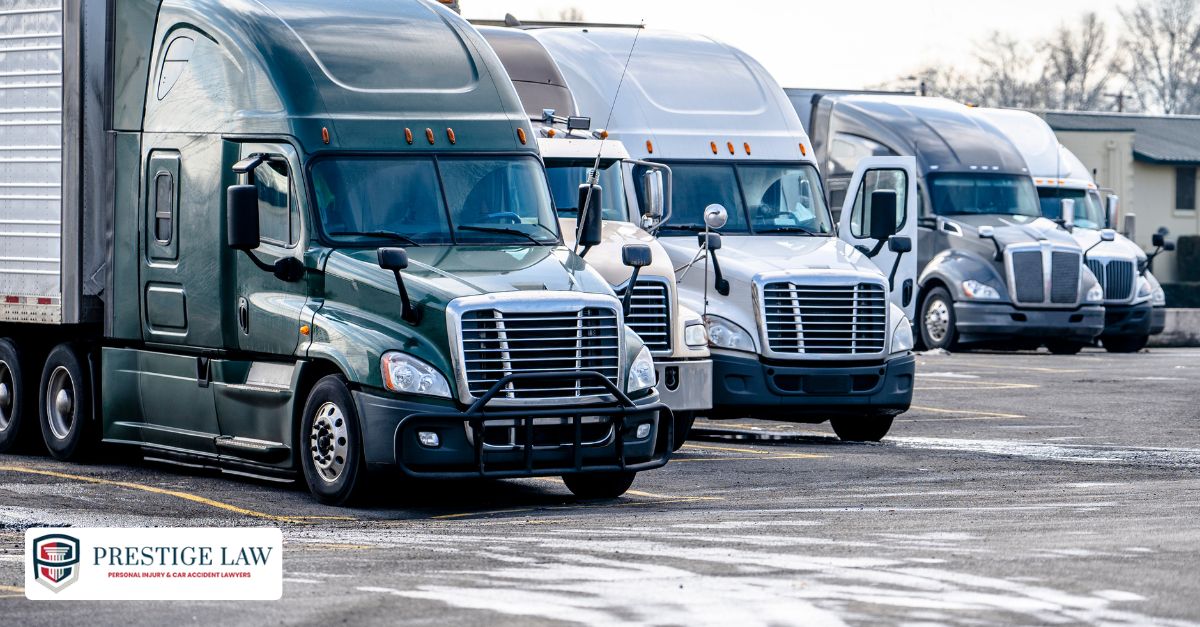
Semi-trucks are extremely heavy—even before they carry any cargo. Their weight depends on how they’re configured and whether they’re pulling a trailer.
Here’s a breakdown:
- Tractor (cab only, no trailer): 10,000 to 25,000 pounds
- Tractor with empty trailer (unladen): Up to 35,000 pounds
- Fully loaded semi-truck (laden): Up to 80,000 pounds—the federal legal limit without a special permit
In U.S. tons (1 ton = 2,000 pounds), that translates to:
- Cab only: roughly 5 to 12.5 tons
- Empty trailer combo: around 9 to 17.5 tons
- Fully loaded: 40 tons
These numbers matter on the road. A truck weighing 80,000 pounds doesn’t stop like a car. It needs significantly more space to slow down or avoid a hazard. Quick stops, sudden swerves, or tight turns are harder and riskier at this scale.
That’s why following distance, blind spot awareness, and responsible loading are so critical. One mistake near a fully loaded semi can have devastating consequences for everyone else on the road.
Why Truck Weight Matters
A semi-truck’s weight directly affects how it performs on the road—and how dangerous it becomes in an emergency. The heavier the vehicle, the more force it generates, the harder it is to control, and the more severe the outcome in a crash.
While a passenger car can stop or swerve quickly, a fully loaded truck reacts much slower. When that truck is overloaded or poorly maintained, the risks multiply.
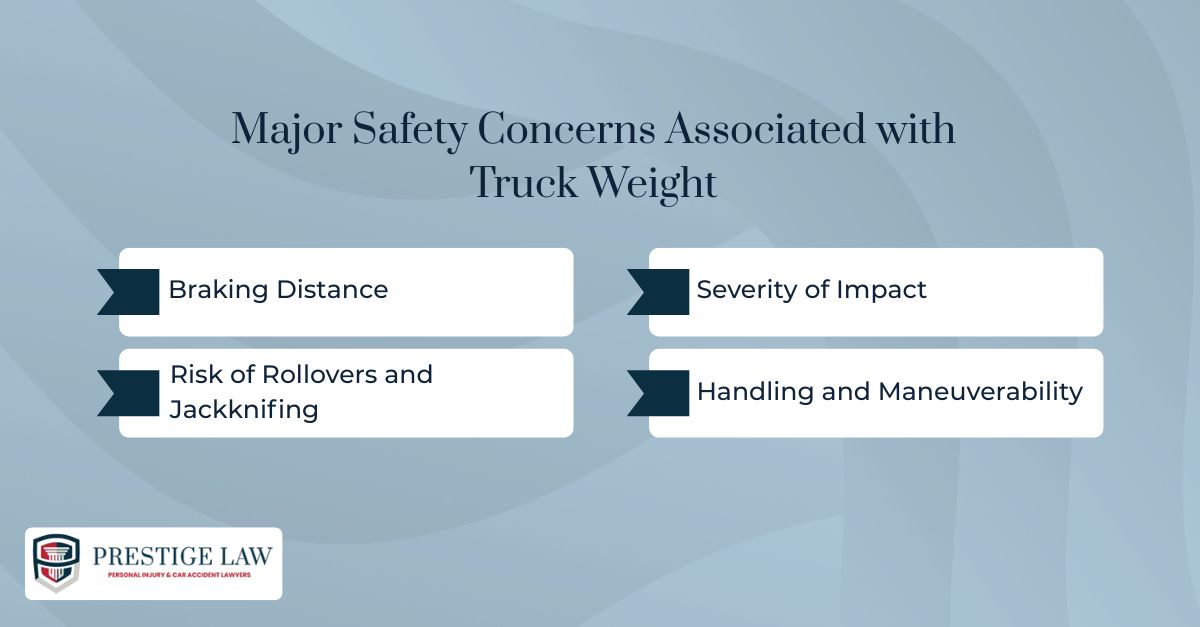
Here are the most serious safety concerns tied to truck weight:
Braking Distance
A semi-truck at highway speed can take over 500 feet to come to a full stop. If a car cuts in front of that truck too closely, the driver may not be able to brake in time—causing a high-impact collision.
Severity of Impact
A heavier vehicle creates more force in a crash. Even low-speed collisions involving loaded trucks can cause life-threatening injuries or total destruction of smaller vehicles.
Risk of Rollovers and Jackknifing
Uneven loads, sharp turns, or emergency maneuvers can lead to rollovers. Jackknifing—when the trailer swings out and forms an “L” shape—can block entire highways and cause multi-car pileups.
Handling and Maneuverability
Heavy trucks have wider turning radii, slower steering response, and massive blind spots. Quick lane changes that might be routine in a car can be impossible—or fatal—for a loaded rig.
Weight also damages roads, weakens bridge infrastructure, and increases maintenance costs for everyone. California enforces an 80,000-pound weight limit for safety and infrastructure preservation. Exceeding it without a special permit is not just illegal—it can lead to serious consequences for the driver and employer, especially in the event of a crash.
How Weight Affects Maneuverability and Braking
Weight doesn’t just slow a truck down—it changes how the entire vehicle behaves. According to the NTEA (Association for the Work Truck Industry), overloading a truck can seriously reduce its ability to steer, accelerate, or stop safely.
When a semi-truck is too heavy:
- Brakes wear faster, increasing the risk of failure.
- Turning becomes unstable, especially on curves or ramps.
- Steering response is delayed, making it harder to avoid hazards.
- Stopping distances grow, sometimes by hundreds of feet.
In short, overloaded trucks become much harder to control—especially during sudden stops or emergency maneuvers.
From a legal standpoint, this matters. If you’re injured in a crash involving a semi-truck, investigators will often look at:
- How much the truck weighed at the time
- Whether the driver followed loading and inspection protocols
- Whether the cargo was balanced and secured properly
In California, comparative negligence law means fault can be shared. But if the truck’s excessive weight contributed to the crash—especially through brake failure or handling loss—that factor can shift more legal responsibility to the trucking company, driver, or shipper.
Overloaded Trucks and Legal Responsibility
When a semi-truck exceeds legal weight limits, the risks on the road increase—and so does the potential for liability in a crash.
In California, operating a truck over the 80,000-pound legal limit without a special permit violates state law. According to Vehicle Code § 42030(a), even being slightly overweight can result in fines, and larger violations can lead to disqualification from commercial driving. But the legal consequences go well beyond tickets.
In the event of a serious accident, an overloaded truck often points to negligence—especially if the weight affects stopping distance, steering, or braking performance.
Determining liability after a truck crash usually requires an investigation. Several parties may be at fault:

The Truck Driver
Drivers are responsible for inspecting their loads and refusing to drive if the truck is overweight or unsafe. If they knowingly drive with a dangerous load, they may be personally liable.
The Trucking Company
If the company pressured the driver to take a heavier load or skipped safety checks to meet delivery deadlines, they could face liability under negligent supervision or vicarious liability.

The Shipper or Loader
Sometimes cargo is packed incorrectly, concealed, or misrepresented. If the weight was hidden or the load was dangerously unbalanced, the company responsible for shipping or loading may share the blame.
The Mechanic or Maintenance Provider
Faulty brakes, worn-out tires, or ignored suspension issues become even more dangerous with added weight. If a mechanic failed to maintain the vehicle, they may be liable for making a bad situation worse.
Weight matters in every accident—but when that weight exceeds legal limits, it may signal deeper failures in safety, training, and oversight. For injury victims, proving that a truck was overloaded can be a powerful factor in a personal injury or wrongful death case.
The Role of Logs and Weigh Station Data
In trucking accident cases, physical evidence is often the key to proving what went wrong—and who is responsible. One of the most valuable types of evidence? The truck’s logs and weigh station data.
These records can show:
- Whether the truck was overweight at the time of the crash
- If the driver skipped required weigh station stops
- Whether inspection reports were falsified or ignored
- When the truck was last serviced and how it was maintained
- If driving time limits or break requirements were violated
Modern trucks often have electronic logging devices (ELDs) or “black boxes” that record braking patterns, speed, and even steering input in the moments before an accident.
This kind of documentation can make or break a case. If the records reveal that the driver avoided weigh stations or that the company ignored obvious safety red flags, it strengthens the argument that the crash could have been prevented.
Overloaded trucks aren’t just about numbers—they’re about choices. When those choices put others at risk, the consequences should be legal as well as physical.
If you’ve been hurt in a truck crash, these records may be your strongest tools for proving liability and securing fair compensation.
How Prestige Law Firm Can Help
If you or someone you love was injured in a crash involving a semi-truck—especially one that may have been overloaded—you need more than just basic legal help. You need a law firm that understands how truck weight, maintenance, and federal regulations affect liability.
At Prestige Law, we’ve handled serious trucking accident cases for over two decades. Led by attorney Paul Aghabala, our firm focuses on high-stakes personal injury and wrongful death claims across California, including in Van Nuys, Palmdale, and greater Los Angeles.
We know what it takes to build a strong case. That includes:
✔ Investigating black box and weigh station data
✔ Working with expert accident reconstructionists
✔ Holding trucking companies and shippers accountable
✔ Identifying all liable parties—from the driver to the loader
✔ Navigating California Vehicle Code and federal trucking laws
Most importantly, we understand the human side. Truck crashes often leave victims with long-term injuries, steep medical bills, and time off work. We fight for maximum compensation—without adding to your financial stress.
That’s why we offer a No Recovery, No Fee promise:
You don’t pay unless we win your case.
📞 Call us today at (818) 788‑0808 or (661) 341‑3939
📧 Email: paul@prestigelaw.com
🌐 Visit: www.prestigelaw.com
Let us take the pressure off so you can focus on healing.
What is the difference between unladen and laden weight for a semi-truck?
Unladen weight is the truck and trailer without cargo. Laden weight includes the full load—up to 80,000 pounds legally in California.
Can a truck driver refuse to haul an overweight load?
Yes. Drivers have a legal duty to inspect their load and can refuse to drive if it’s unsafe or violates weight limits.
Do weigh stations actually catch overloaded trucks?
Yes. Weigh stations use certified scales to flag trucks over the legal limit. Overweight trucks may be fined or taken out of service.
What should I do if I’ve been hit by a semi-truck in California?
Get medical help, report the accident, document the scene if possible, and speak with a truck accident lawyer right away.

Get Started Today!
24 hours a day / 7 days a week / 365 days a year
Contact our Los Angles and Antelope team of attorneys for a free consultation.