

Out-of-Pocket Car Crash Payment: What You Risk in CA
Published on / Category: California Driving Laws, Safety Guides & Tips
After a minor car accident, the other driver offers to pay you directly—no insurance, no police, just quick cash. It sounds convenient. But is it a good idea?
In California, out-of-pocket agreements after a crash come with serious legal and financial risks. You might miss hidden injuries, lose your right to compensation, or break reporting laws—often without realizing it.
Before accepting any private payment, it’s critical to understand your legal responsibilities and the long-term consequences.
In this guide, we’ll explain what these deals really mean, when they’re dangerous, and why speaking with a personal injury lawyer could protect your rights and maximize your recovery.
At a Glance:
Accepting out-of-pocket payment after a crash in California may seem easier, but it comes with legal and financial risks. You could lose the right to future compensation, violate DMV reporting laws, or get stuck with repair and medical bills. Always document the accident, notify your insurer, and speak with a personal injury lawyer before agreeing to any private deal.
What is an out-of-pocket payment after a crash?
After a car accident, drivers often worry about insurance premiums, repairs, and potential legal issues. Sometimes, the at-fault driver may offer to pay for your damages directly—in cash, through a personal check, or with a promise to cover your expenses later.
This type of private agreement is called an out-of-pocket settlement. It avoids involving insurance companies or law enforcement and is often pitched as a way to “keep things simple.”
People may offer or accept out-of-pocket payment to:
- Avoid an insurance claim or points on a driving record
- Get repairs paid for more quickly
- Keep premiums from increasing
- Hide the fact they’re uninsured or under the influence
- Avoid legal consequences or workplace penalties
While this might sound like a fast solution, especially for what seems like “minor” damage, these private arrangements are risky and rarely protect your rights. Without documentation, legal oversight, or insurance support, you may be left paying for more than you bargained for.
Is it legal to accept out‑of‑pocket payment in California?
Technically, yes—you can agree to a private payment after a crash. But that doesn’t mean you’re free from legal obligations.
Under California Vehicle Code §16000, you’re required to report an accident to the DMV within 10 days if it results in:
- More than $1,000 in property damage
- Any injury (even minor)
- A fatality
This applies regardless of whether you accept out-of-pocket payment or decide not to involve your insurance provider.
To report, you must file an SR-1 Accident Report with the DMV. This form includes details about:
- Each driver and vehicle involved
- Insurance information
- Any injuries or damages
- A description of the incident
Failing to report a qualifying accident could lead to:
- License suspension under California Vehicle Code §§16004 and 16070
- Insurance complications
- Legal penalties
So while a cash offer at the scene might seem simple, skipping the required reporting process—even with good intentions—can expose you to major consequences.
👉 Download the official SR-1 form here (California DMV)
The Risks of Accepting Private Payment
Taking an out-of-pocket payment instead of going through insurance or filing a report may feel convenient in the moment—but it can expose you to serious legal, medical, and financial risks down the line.
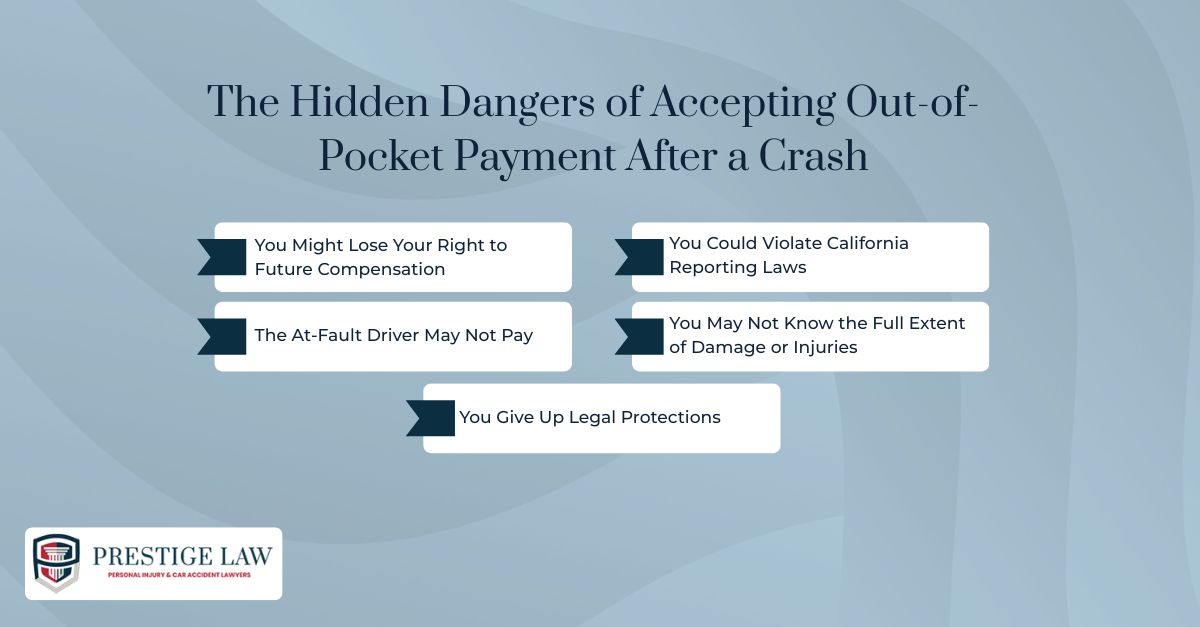
1. You Might Lose Your Right to Future Compensation
Accepting cash or a check, even informally, may be treated as a binding agreement. If you later discover additional vehicle damage or medical issues, it could be too late to file an insurance claim or a lawsuit.
California courts may enforce verbal or handshake agreements, especially if there’s evidence you accepted payment in exchange for dropping further action.
2. You Could Violate California Reporting Laws
Under California law, you’re required to report an accident to the DMV using Form SR-1 if there’s over $1,000 in damage or any injury. Failing to report it—whether or not you take private payment—can lead to:
- Suspension of your driver’s license
- Denied coverage from your own insurer
- Fines and administrative penalties
Even if the other driver asks to “keep it between us,” you’re still legally responsible for reporting the crash.
3. The At-Fault Driver May Not Pay
Without a signed agreement or official documentation, the other driver has no legal obligation to follow through. They may:
- Ghost you after the initial conversation
- Provide false contact info
- Refuse to pay the full amount promised
- Deny the accident ever happened
Without insurance or police involvement, it’s often your word against theirs.
4. You May Not Know the Full Extent of Damage or Injuries
Many injuries (like whiplash or concussions) take hours or days to develop. Similarly, modern vehicles can suffer internal damage that isn’t visible right away. If you settle too soon, you could be stuck paying for repairs or medical care out-of-pocket once symptoms or issues appear.
5. You Give Up Legal Protections
Filing a formal insurance claim gives you access to:
✔ Medical evaluations
✔ Professional damage assessments
✔ A legal record of the crash
✔ Pathways to compensation if things escalate
A private payment offers none of these protections—and leaves you with limited options if complications arise later.
What You Should Do Instead
Out-of-pocket offers may sound convenient, but skipping insurance or legal steps can cost you far more later. Here’s what to do instead to protect yourself under California law.
1. Exchange Complete Information
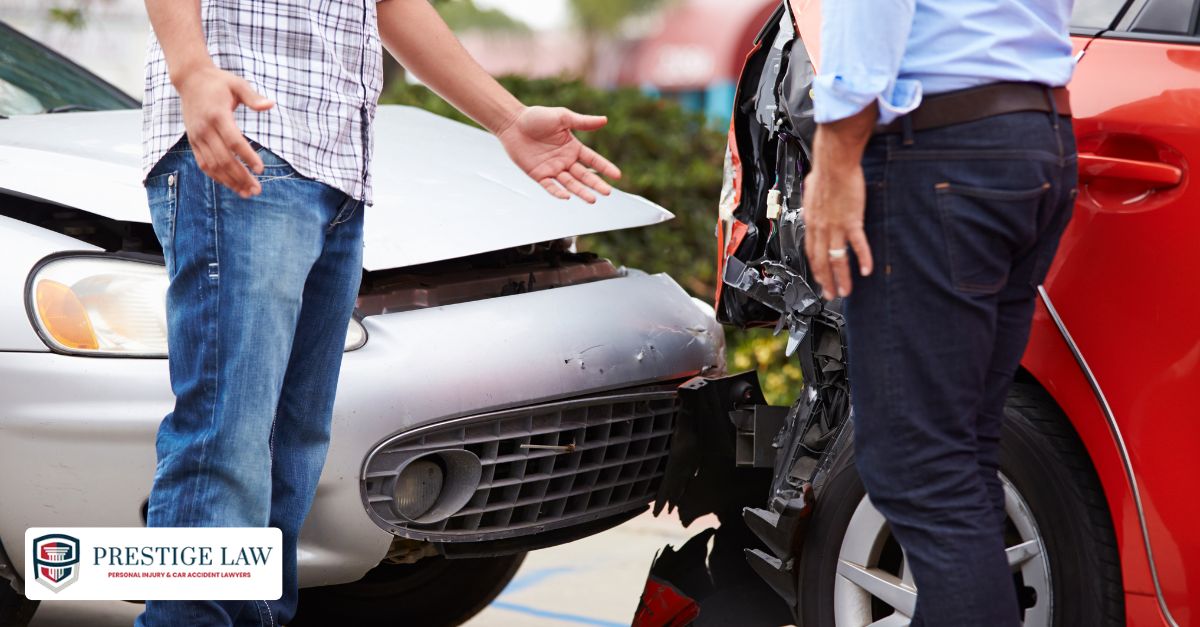
Even in minor accidents, California law requires all drivers to exchange:
- Full names and contact details
- Driver’s license numbers
- License plate and registration numbers
- Insurance policy info
This ensures you’re protected if problems come up later—like delayed injuries or disputed fault.
2. Take Photos at the Scene
Document the accident thoroughly. Use your phone to take clear photos of:
- Vehicle damage (all angles)
- License plates
- Road conditions and nearby signs
- Any visible injuries
- The other driver’s insurance card and driver’s license
These images may become crucial evidence if a claim or dispute arises.
3. File a Police Report (When Required)
Call law enforcement if:
- There’s any injury or suspected injury
- The other driver is intoxicated or unlicensed
- A hit-and-run occurs
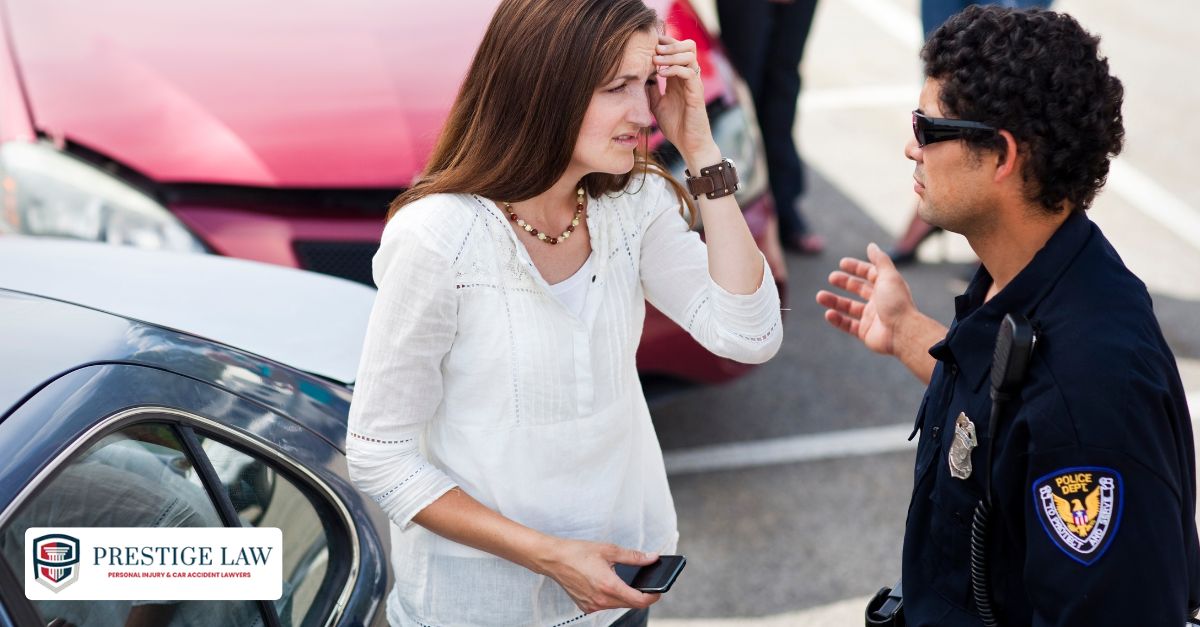
Even if it’s not legally required, filing a police report helps create an objective, third-party account of what happened—especially useful if the other party later denies fault.
4. See a Doctor Promptly
You might feel “fine” after the crash, but symptoms like neck pain, headaches, or dizziness often develop later. Getting a medical exam right away protects your health—and legally documents any injuries tied to the accident.
5. Notify Your Insurance Company
Most insurers require you to report an accident within a short window, even if you don’t plan to file a claim. Failing to notify them could violate your policy and lead to denied coverage later.
Even if you’re unsure whether to proceed with a claim, reporting the crash keeps your options open—and gives your insurer a record of the event.
How a Personal Injury Lawyer Can Help
When you’re dealing with the aftermath of a crash—especially one involving out-of-pocket payment offers—it’s easy to overlook your legal exposure. That’s where a personal injury lawyer becomes essential.
1. Uncover the True Value of Your Case
A crash that seems “minor” can quickly become expensive. An attorney helps you:
✔ Identify hidden vehicle damage
✔ Calculate future medical care costs
✔ Account for lost wages, missed work, or long-term treatment
✔ Evaluate pain and suffering
Without legal guidance, you could accept far less than you’re legally entitled to.
2. Protect You from Reversed or Denied Agreements
The other driver may change their story or refuse to pay. A lawyer documents your rights from the start and helps ensure any agreement is enforceable. If no formal agreement exists, they’ll help preserve your ability to recover damages through proper legal channels.
3. Handle Insurance Communications
Insurance companies are skilled at minimizing payouts. A lawyer can:
✔ Speak with adjusters on your behalf
✔ Challenge denied or underpaid claims
✔ Ensure you don’t say anything that weakens your case
✔ Fight back against pressure to settle quickly
Having legal representation can make a significant difference in how your case is handled—and how much you receive.
4. Maximize Your Compensation
A personal injury lawyer builds a strong case with evidence, expert evaluations, and negotiations that reflect the full impact of your injuries and losses. That can mean far more compensation than a quick cash offer or lowball settlement.
5. Advise Vulnerable Drivers
If you’re undocumented, uninsured, or simply unsure whether reporting the crash will cause problems, a lawyer can help you safely navigate the system. Confidential legal advice can protect you—regardless of your immigration status or insurance situation.
Are you injured in a crash? Prestige Law Firm can help you
At Prestige Law Firm, we know how stressful life becomes after an accident. Medical bills stack up, your car may be out of commission, and you’re left wondering if that quick cash offer was a mistake. That’s why we’re here—to help you take control of the situation and protect what matters most.
Led by attorney Paul Aghabala, our team provides aggressive, results-driven legal support to car accident victims across Van Nuys, Palmdale, and Los Angeles County. Whether you were hit by a reckless driver, injured at work, or involved in a rideshare collision, we’ll fight to get you the compensation you truly deserve.
Why choose us?
✅ Over two decades of experience handling serious injury claims
✅ Direct access to your attorney—never pushed off to assistants
✅ Millions recovered for clients through settlements and trial wins
✅ No upfront fees – you pay nothing unless we win your case
Don’t try to handle insurance negotiations or legal decisions alone—especially after accepting (or considering) private payment. We’ll review your case, explain your rights, and guide you step-by-step.
📞 Call or text us now at (818) 788-0808 or (661) 341-3939
📧 Email: paul@prestigelaw.com
🌐 Visit: www.prestigelaw.com
Let Prestige Law Firm take over the legal stress—so you can focus on healing.
Conclusion
Accepting out-of-pocket payment after a crash might seem like an easy way to avoid paperwork and hassle—but it can cost you far more than you think. From hidden injuries and vehicle damage to lost legal rights and unfulfilled promises, private settlements carry serious risks.
In California, protecting yourself starts with following the law: report the accident, document everything, and seek medical attention. Before making any decisions—especially one that affects your future finances or health—talk to someone who knows the system inside and out.
At Prestige Law Firm, our experienced personal injury lawyers are here to make sure you’re not taken advantage of. If you’ve been hurt, had your car damaged, or are facing unclear legal risks after an accident, let our trusted car accident attorneys help you take the next step with confidence.
Contact us today for a free consultation. We’ll listen, explain your options, and help you move forward—on your terms.
Is it legal to settle a car accident privately in California?
Yes, but only under specific circumstances. Even if both parties agree to settle privately, you must report any crash involving injuries or more than $1,000 in property damage to the DMV using Form SR-1.
Can I be sued after accepting cash for a car accident?
Yes. If there’s no formal written agreement—or if the other driver later disputes fault—you could still be sued. Verbal agreements are risky and often unenforceable.
What happens if I don’t report a car accident in California?
Failure to report a qualifying accident can result in DMV penalties, including suspension of your driver’s license and possible complications with your insurance coverage.
What are the risks of taking a cash offer at the scene?
You might miss hidden vehicle damage or injuries, lose the right to future compensation, and leave yourself with no legal protection if the other driver fails to pay or changes their story.
What are the benefits of hiring a car accident lawyer in California?
An attorney protects your rights, deals with insurance companies, builds a strong case, and helps you recover fair compensation—especially when informal agreements or out-of-pocket offers threaten to shortchange you.
Get Started Today!
24 hours a day / 7 days a week / 365 days a year
Contact our Los Angles and Antelope team of attorneys for a free consultation.