
Can You Sue for a Defective Product in California?
Published on / Category: Product & Animal Liability
Everyday products — the car you drive, the medication you take, even the appliances in your kitchen — are supposed to be safe. But when something goes wrong, and that product causes serious injury, the results can be painful, expensive, and life-changing.
That’s where product liability law steps in.
If you or someone you love has been hurt by a defective or dangerous product, you may be legally entitled to compensation — even if the company wasn’t negligent.
But how do you know if you have a valid claim? What counts as a defect? And who exactly can be held responsible?
In this guide, we’ll break it all down:
- What product liability means
- The different types of product defects
- When you can sue
- And what steps to take after a product-related injury
You’ll also learn how Prestige Law Firm P.C. helps injured Californians recover compensation and hold manufacturers accountable — with no upfront fees.
At a Glance:
If you were injured by a defective product, you may be entitled to compensation — even without proving negligence. Defects can stem from design flaws, manufacturing errors, or missing safety warnings. California’s strict liability laws make it easier to sue. Prestige Law Firm P.C. helps victims hold companies accountable and recover damages.
What is product liability?
Product liability is the legal responsibility companies have when a product they sell turns out to be unsafe and causes harm.
If you’re injured by a defective product, you may be able to sue the manufacturer, seller, or distributor — even if they weren’t negligent.
Strict Liability in California
Most product liability cases in California follow a strict liability rule. That means you don’t have to prove the company was careless — only that:
- The product had a defect
- The defect made it unreasonably dangerous
- You were injured while using it as intended or in a foreseeable way
This approach protects consumers by making sure businesses are held accountable for dangerous products.
What Kinds of Products Are Covered?
Just about any type of product can fall under product liability law — including:
- Cars and auto parts
- Prescription drugs and medical devices
- Children’s toys and household appliances
- Power tools, cosmetics, electronics, and more
If a product caused serious injury, you may be eligible for compensation — especially if medical treatment was needed.
What are the 3 types of product liability claims?
Product liability claims usually fall into one of three categories, depending on how the product was flawed. Identifying the type of defect is the first step in building a strong case.
Design Defects
This type of defect is built into the product from the start. Even if it’s manufactured correctly, the design itself makes it dangerous.
Example: A car with a fuel tank placed where it’s likely to explode in a rear-end crash. Every vehiclemade from that design carries the same risk.
Manufacturing Defects
The product’s design is safe, but something goes wrong during production. Only some units end up defective.
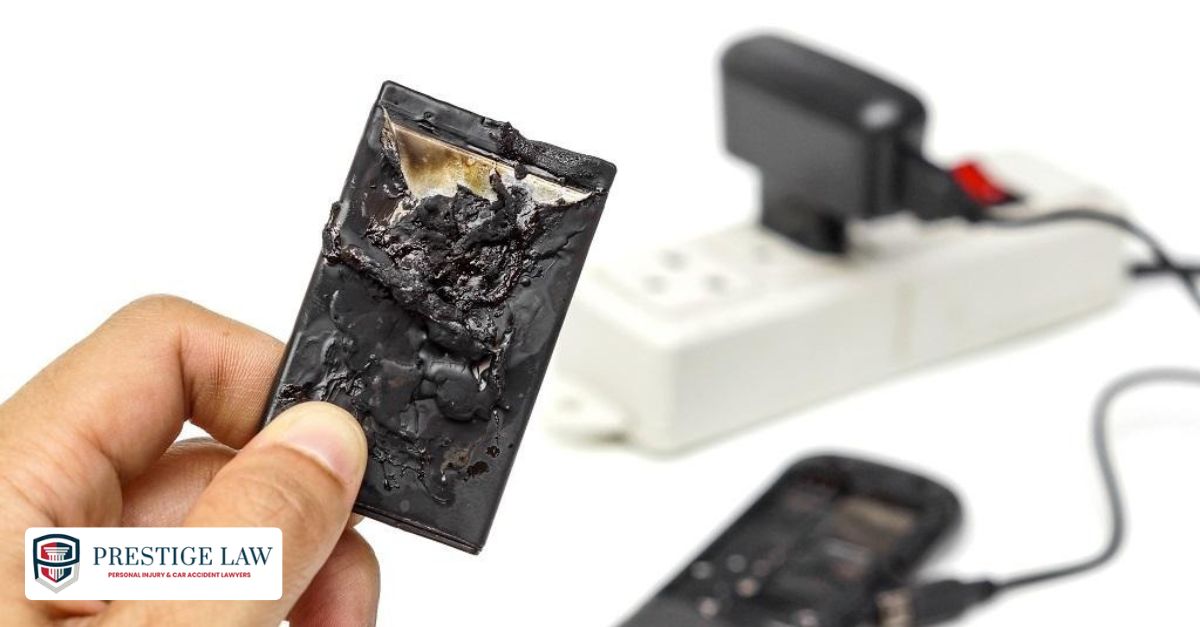
Example: A batch of pain medication is contaminated at the factory. Or a swing set chain cracks due to a flaw in the metal.
Marketing Defects (Failure to Warn)
Some products are dangerous if used the wrong way — and it’s the company’s job to give proper warnings. If they fail to do so, they may be liable.
Example: A cleaning product becomes toxic when mixed with bleach, but the label doesn’t warn you. Even if the product works, the lack of warning makes it dangerous.
Key Indicators That You May Have a Valid Product Liability Claim
Not every injury leads to a lawsuit. But certain red flags suggest you may have a strong case. Here’s what to look for:
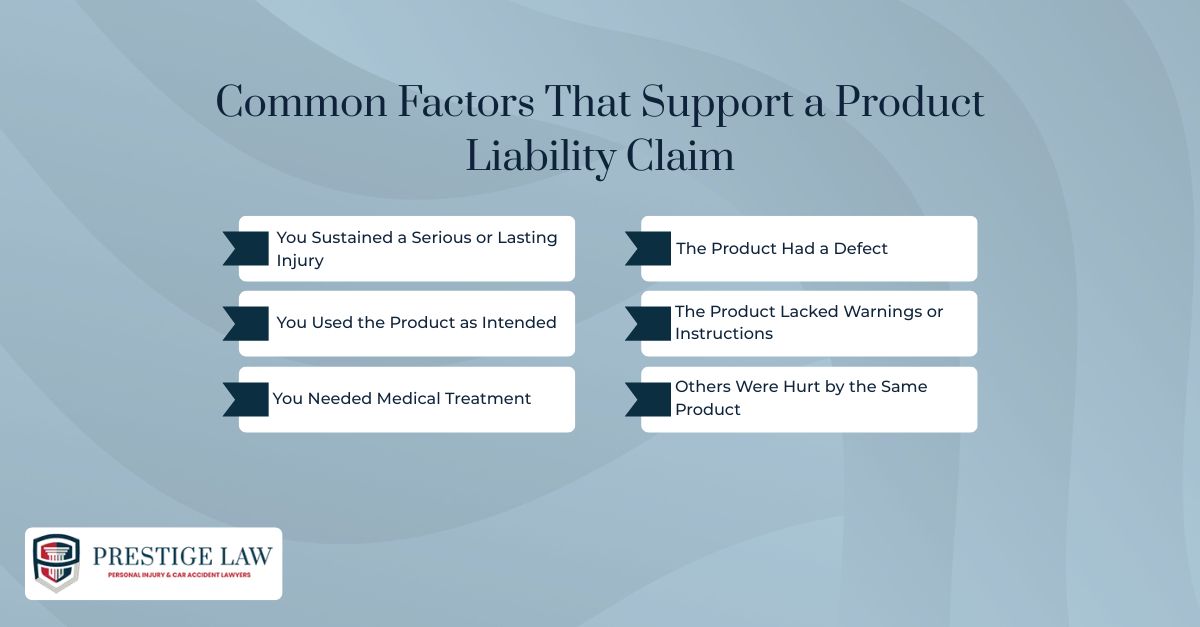
You Suffered a Serious or Lasting Injury
Minor cuts or discomfort usually don’t justify legal action. But if you needed surgery, hospitalization, or long-term treatment, your case is likely worth pursuing.
Injuries like broken bones, burns, nerve damage, or chronic pain can result in significant compensation.
The Product Had a Defect
If there’s clear evidence the product was defective — in design, manufacturing, or labeling — you may be entitled to damages.
This includes malfunctioning electronics, toxic materials, or missing safety warnings.
You Used the Product as Intended
You don’t have to follow the instructions perfectly. But if you used the product in a way the manufacturer could reasonably expect, and it still hurt you, that supports your claim.
The Product Lacked Warnings or Instructions
Some products carry hidden risks. The company must clearly alert users. If they failed to warn you about potential harm, they could be held responsible.
You Needed Medical Treatment
Medical records help connect the injury to the product. ER visits, prescriptions, therapy, or rehab all serve as vital evidence.
Without documentation, it’s harder to prove the extent of your injury or the cost of recovery.
Others Were Hurt by the Same Product
If the product injured multiple people or was recalled, your case might be part of a larger issue. This strengthens your position and could even lead to a mass tort or class action.
Who can be held liable in a product liability case?
In California, responsibility doesn’t stop with the manufacturer. Multiple companies in the supply chain can be held legally accountable for a defective product — even if they didn’t design or build it.
Thanks to strict liability laws, you don’t have to prove negligence. If the product was defective and caused injury, several parties could share the blame.
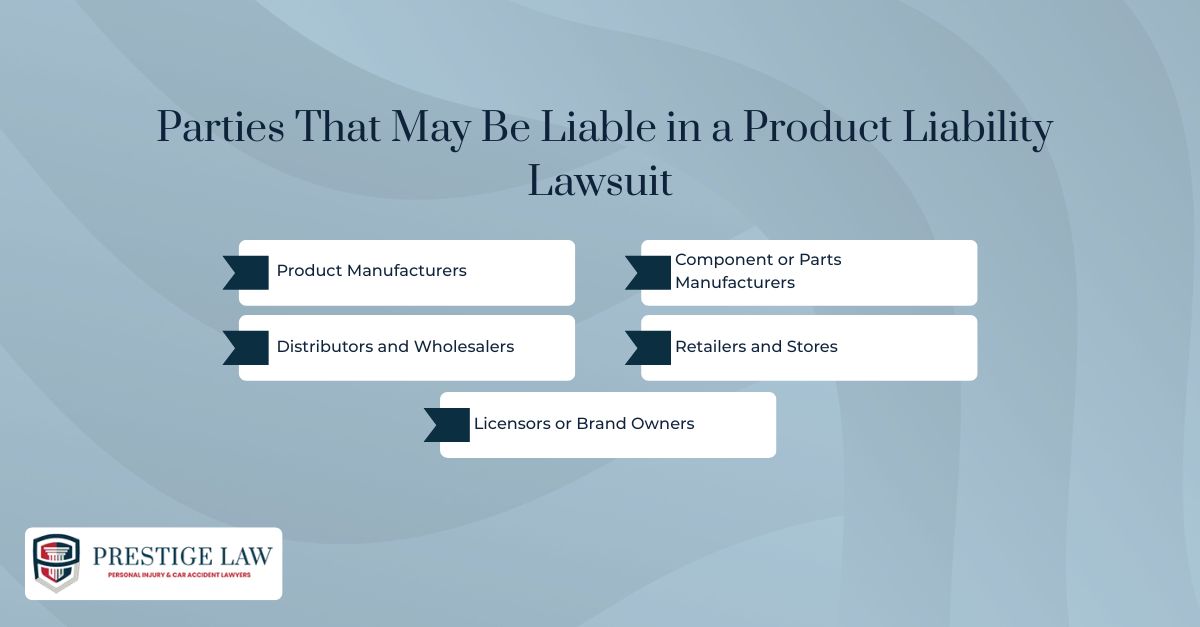
Product Manufacturers
These are the companies that design and produce the finished product. If the defect happened during design or assembly, they’re usually the main party at fault.
Parts or Component Manufacturers
Many products are built from parts made by different suppliers. If one component — like an airbag, battery, or wiring — is defective, the maker of that part may be liable.
Distributors and Wholesalers
Even if they didn’t build the product, these “middlemen” may be responsible for passing along something dangerous without inspecting or recalling it.
Retailers and Stores
Stores that sell defective items can also be held liable — even if they didn’t know about the defect. Once a product hits their shelves, they have a legal duty to ensure it’s safe for customers.
Brand Owners or Licensors
Some companies lend their names to products made by others. If their branding leads you to trust the product, they may share legal responsibility if it causes harm.
How do you prove a product liability case in California?
To win a product liability claim, you need to show that the product was defective — and that the defect directly caused your injury. California law allows you to build your case using one (or more) of these legal theories:
Strict Liability
This is the most common path. You don’t need to prove the company was careless — only that:
- The product was defective
- You used it in a reasonably expected way
- That defect caused your injury
Strict liability makes it easier to hold companies accountable, but they may still argue that you misused the product or ignored warnings.
Negligence
With a negligence claim, you must show that the company failed to take reasonable care in designing, manufacturing, or selling the product.
This might involve:
- Poor quality control
- Skipping safety tests
- Using substandard materials
- Ignoring known risks
You’ll need solid evidence — including expert testimony — to prove they breached their duty of care.
Breach of Warranty
If a product fails to work as promised — either through marketing, labeling, or implied expectations — you may have a case under breach of warranty.
You don’t have to prove intent or carelessness. You just need to show the product didn’t perform as it reasonably should have.
How Prestige Law Firm Can Help After a Product-Related Injury
If a defective product has injured you, acting quickly is critical. At Prestige Law, we help clients across California take the right legal steps — and get the compensation they deserve.
What to Do After the Injury
Taking these actions right away can make a big difference in your case:
1. Get Medical Treatment
Always see a doctor first. Your health comes first — and medical records will help prove the severity of your injuries.
2. Preserve the Product
Don’t throw it out or fix it. Store it in its original, post-incident condition. It could become key evidence.
3. Document Everything
Take clear photos of the product, your injuries, the scene, and any packaging or instructions. Save receipts, hospital bills, and other records.
4. Don’t Talk to Manufacturers or Insurers
They may try to get you to admit fault or settle for less. Let your lawyer handle all communication from the start.
What We Do for You
Once you contact Prestige Law Firm, we will:
- Investigate the product defect and identify all potentially responsible parties
- Collect expert opinions and supporting evidence
- Communicate with insurance companies and opposing counsel
- Fight for maximum compensation — in negotiations or in court
What Compensation Can You Recover?
If your case is successful, you may be entitled to:
- Medical costs — ER visits, surgeries, rehab, prescriptions
- Lost income — Past and future wages
- Pain and suffering — Emotional trauma and physical pain
- Long-term disability — If the injury affects your ability to work
- Wrongful death damages — If a loved one passed away due to the product
At Prestige Law Firm P.C., we’ve recovered millions for injured clients. You’ll work directly with attorney Paul Aghabala, not junior staff. And with our no recovery, no fee policy, you don’t pay unless we win.
📞 Call (818) 788-0808 or (661) 341-3939
📧 Email paul@prestigelaw.com
Free consultations. No pressure. Just answers.
Conclusion
Defective products can cause serious injuries, steep medical bills, lost income, and long-term suffering. You shouldn’t have to carry that burden alone — especially when the law is on your side.
California’s product liability laws are designed to protect consumers and hold companies accountable when they put unsafe items on the market. Whether the defect was in the design, manufacturing, or lack of warning, you may be legally entitled to compensation.
The key is acting quickly.
- Get medical care
- Preserve the product
- Talk to a lawyer before dealing with insurance companies
At Prestige Law Firm P.C., we bring over two decades of experience fighting for injured clients across California — including Van Nuys, Palmdale, and greater Los Angeles County. We understand how to build strong cases and secure real results.
If you’ve been injured by a defective product, call us for a free, no-obligation consultation.
We’ll review your case, explain your rights, and fight for the compensation you deserve.
Can you sue a company for a faulty product?
Yes, if the product was defective and caused your injury.
How do you prove product liability?
Show the product was defective, used as intended, and caused harm.
What is an example of a product liability case?
A crash caused by faulty brakes due to a manufacturing defect.

Get Started Today!
24 hours a day / 7 days a week / 365 days a year
Contact our Los Angles and Antelope team of attorneys for a free consultation.