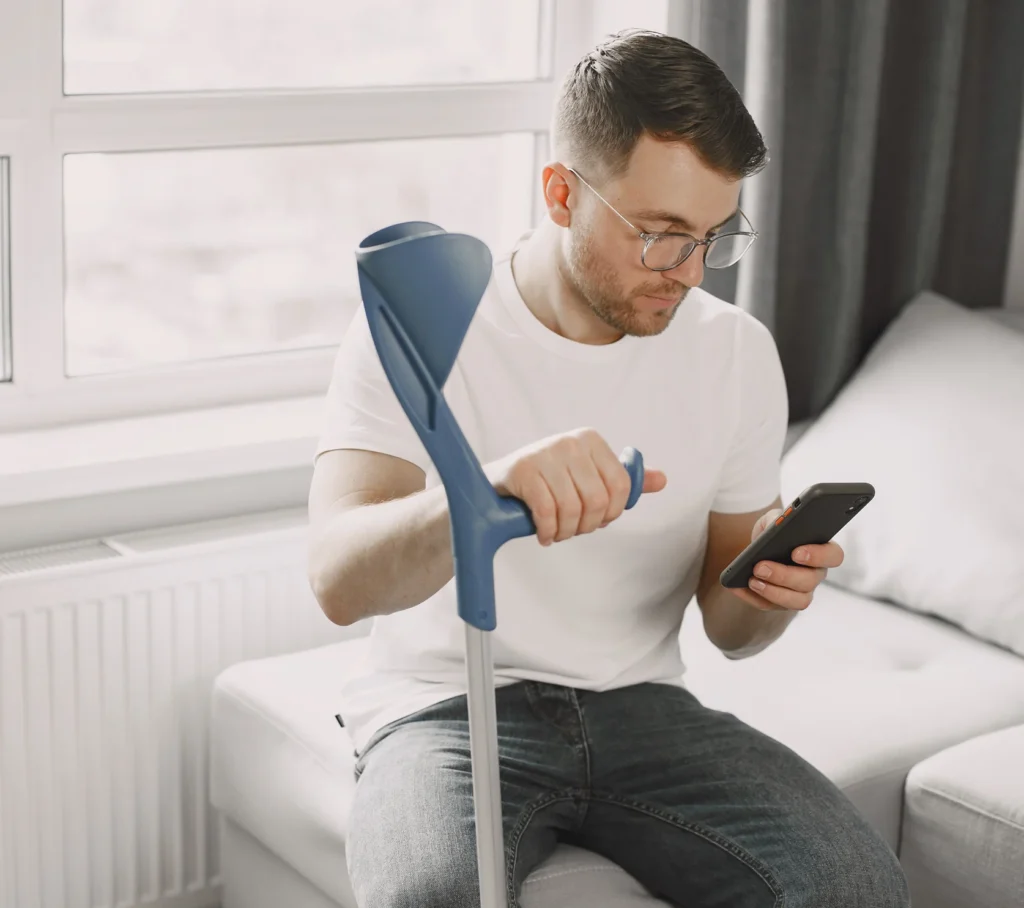
Los Angeles Reasonable Accommodation & Disability Lawyer





Los Angeles Reasonable Accommodation Lawyer
A denied reasonable accommodation for a disability or medical condition in Los Angeles can be a violation of your rights under California and federal law. Depending on the employee’s condition, job duties, and circumstances, reasonable accommodations may include changes to work schedules or duties, leave, workplace modifications, or other effective adjustments.
Prestige Law Firm P.C. represents employees facing failure-to-accommodate violations, disability discrimination, and retaliation.
Confidential consultations are available. In qualifying cases, contingency or hybrid fee arrangements may be available.


If your employer in Los Angeles denied a reasonable accommodation for your disability, you may have a legal claim under California law. You could recover lost wages, emotional distress damages, and more. Strict deadlines may apply, so it’s important to act promptly. Prestige Law Firm P.C. offers confidential consultations. In qualifying cases, contingency or hybrid fee arrangements may be available.
Top Personal Injury Lawyers |
Prestige Law Firm P.C – Get
Justice Today
Injured in a car accident or due to someone else’s negligence? Prestige Law’s experienced injury attorneys are ready to fight for you.
Book your free consultation today and let us help you win the compensation you deserve.

What Compensation Can You Recover for Failure to Accommodate?
If your rights were violated, you may be entitled to compensation under California and federal law. The specific damages depend on your situation, how the employer responded, and the impact the violation had on your employment and well-being.

What Is the Interactive Process Under California Law?
The interactive process is a legally required exchange under California law where employers and employees work together to identify reasonable accommodations. Both sides must participate in good faith, and failure to engage may violate the California Fair Employment and Housing Act (FEHA).

Employer’s Duty to Engage in Good Faith
Employers must initiate discussions when aware of accommodation needs, evaluate limitations, explore alternatives, and cannot simply deny requests without meaningful, good faith dialogue.

Documentation Requirements
Depending on the circumstances, an employer may request reasonable medical documentation concerning the employee’s functional limitations and need for accommodation. Disability-related medical information obtained through the accommodation process is subject to confidentiality requirements.

Common Employer Mistakes
Mistakes include ignoring requests, delaying responses, rejecting accommodations without discussion, demanding unnecessary medical details, or failing to consider reasonable alternative solutions.

When Delays May Violate the Law
California requires employers to engage in a timely, good-faith interactive process. Unreasonable delays in responding to or addressing an accommodation request may therefore become relevant when evaluating whether an employer met its legal obligations.

Top Personal Injury Lawyers |
Prestige Law Firm P.C – Get
Justice Today
Injured in a car accident or due to someone else’s negligence? Prestige Law’s experienced injury attorneys are ready to fight for you.
Book your free consultation today and let us help you win the compensation you deserve.

Deadlines for Filing a Reasonable Accommodation Claim in California
Legal deadlines can directly impact your ability to recover damages, making it critical to understand when and how to act.

CRD Filing Timelines
For many employment discrimination and accommodation claims under FEHA, a complaint generally must be filed with the California Civil Rights Department within three years of the alleged unlawful conduct, subject to applicable exceptions.

EEOC Filing Deadlines
For covered claims filed through the EEOC’s Los Angeles District Office, employees in California generally have 300 days from the alleged discriminatory act to file a charge. Federal coverage and filing requirements vary depending on the claim and employer.

Statute of Limitations After Right-to-Sue Notice
For California FEHA claims, an employee who obtains a CRD right-to-sue notice generally has one year from the date of the notice to file a lawsuit. Federal claims follow separate procedures and deadlines.

Arbitration Considerations
Employment agreements may require arbitration, which can impose different deadlines and procedures that affect how and when your claim proceeds.
Common Examples of Reasonable Accommodations
Reasonable accommodations can take many forms depending on your job and medical needs, including:

Modified Work Schedules
Adjusting start times, shifts, or hours to accommodate medical needs.

Remote or Hybrid Work
Allowing work from home or flexible hybrid arrangements when feasible.

Additional Leave
Providing extra unpaid or paid leave for medical treatment or recovery.

Reassignment to Vacant Position
Transferring employees to a vacant role they can perform with limitations.

Ergonomic Equipment
Providing specialized chairs, desks, or tools to reduce physical strain.

Adjusted Job Duties
Modifying non-essential tasks while maintaining core responsibilities of the role.
Employer Defenses We Frequently Challenge
Certain defenses are commonly used by employers to explain or justify accommodation denials, including:

What Our Client Say About Us
- Thank you Prestige law firm. They are great at communicating and providing updates. Thank you Mr. Paul and Team.
- Estoy muy agredecido con Paul. El abogado Paul me ayudo con mi caso. Recomiendo a esta firma porque son muy professionales y se preocupan de sus clientes. Muchas gracias Prestige law.
- Fue muy buena, y me atendieron de inmediato y siempre al pendiente de lo que se necesitaba para que mi caso fuera lo mejor posible, el abogado muy bien y todo el personal de oficina amables y al pendiente de todo, fue una experiencia muy buena. Muchas gracias. Atte. DANIEL GARCIA BALDERAS.
- I’d like to sincerely thank Paul Aghabala and the Prestige Law firm for all of their time and hard work. I was a scared kid when I reached out and they helped me through the hardest time in my life. They truly fought for me. Thank you!
- It has been a pleasure dealing with Paul and his associates. They genuinely care about you and your case. They are knowledgeable, honest and caring about you and your progress. Thank you for your service. I will definitely be back.
- Awesome firm to handle my car accident! I got rear ended last year on Valentine’s Day 2024 and that was a bummer. After being referred to this team of professional attorneys they handled my case with care and continuous communication through all of my medical care. I felt they did their job with integrity and I would recommend them if you’re ever in a car accident. Thanks Prestige!
- Prestige Law son un grupo de Abogado’s Que me ayudaron a obtener lo Maximo en llevar mi caso de accidente
- Maravillosos mi caso ya esta cerrado con muy buenas ganancias para mi. Super recomendados.
- I never in a million years thought that I would be one of those people to get hit in the rear it was totally devastating and I had no idea what to do. I made contact with the prestige law firm and they totally put me at ease not only did they get me Immediate medical attention and help with my aches and pains they got me a settlement that was beyond my wildest dreams I will always be grateful to them. I hope I’m never in another accident but if I am I will definitely be calling the prestige Law Firm


Speak With a Los Angeles Reasonable Accommodation Lawyer
If your employer denied a reasonable accommodation in Los Angeles, you may have legal options. Prestige Law Firm P.C. provides confidential consultations to help you understand your rights and next steps under California and federal law.
We focus on employee-side representation, offering:
- Employee-focused advocacy tailored to your situation
- Deep knowledge of FEHA and ADA requirements
- Protection against retaliation and unlawful treatment
- Strategic case evaluation based on facts and evidence
Confidential consultations are available. In qualifying cases, contingency or hybrid fee arrangements may be available.
Serving clients across Los Angeles, including Encino, Van Nuys, Sherman Oaks, Reseda, Northridge, and the San Fernando Valley.

We make it convenient to connect with our team through multiple office locations:
Sherman Oaks
- 818-788-0808
- 14541 Sylvan Street Van Nuys, CA 91411
- info@prestigelaw.com
Encino
- 818-425-9815
- 15915 Ventura Blvd. Penthouse 5\Encino,CA 91436
- info@prestigelaw.com
Palmdale
- 661-341-3939
- 1043 W. Ave M-4 Suite B, Palmdale, CA 93551
- info@prestigelaw.com
Contact Us Today to speak directly with an attorney about your situation.
Frequently Asked Questions
Can I be fired for requesting accommodation?
What if my disability is temporary?
Do mental health conditions qualify?
What if my employer says remote work is not possible?
Do small employers have to comply?
Get Started Today!
24 hours a day / 7 days a week / 365 days a year
Contact our Los Angeles and Antelope team of attorneys for a free consultation.